

HR Management Services: The Key to Organizational Structure
Because organizational structure is not maintained by an org chart — it is maintained through the employee lifecycle. Roles must be defined, policies enforced, compensation kept fair, compliance kept current, and talent retained. An HR management service supplies exactly that machinery, which is why it matters most to small and growing businesses that have no in-house HR department to do it.
People are often called an organization’s most valuable asset, yet until recently marketing, finance, and sales were treated as more crucial to success than human resource management. New technologies, global markets, and flatter organizational hierarchies have reversed that thinking — today’s executives put finding and retaining the best talent at the top of the priority list.
To support organizational goals and strategic plans, human resource management develops the personnel policies and procedures — and the culture — that represent a company’s fundamental values and equip staff to work at maximum efficiency.
How an HR Management Service Maintains Organizational Structure
An effective HR management service builds and preserves structure by managing your most valuable asset — your employees — across five main duty areas: workplace safety, staffing, wages and benefits, training and advancement, and compliance. In smaller firms, one HR manager often carries several of these at once, and the exact mix shifts with your industry, company size, and workforce type.
Beyond finding and developing talent and strengthening collaboration across the workforce, the crucial duties include:
- Identifying the skills and expertise each role requires — which makes it simpler to hire the best candidates, set fair remuneration, and design training programs
- Supporting regulatory compliance through health and safety policies, handling employee complaints, and working with union staff where relevant
- Running performance reviews that guide promotions, raises, and terminations while driving improvement through constructive feedback
- Increasing employee buy-in to company goals by recognizing accomplishments and rewarding top performers
- Delivering training — from onboarding to advanced courses — that raises productivity, lowers turnover, and reduces the need for close supervision
5 Core Requirements of an HR Management Service
HR professionals improve employer–employee relations and workplace productivity through several distinct but connected roles:
1. Hiring staff: Staffing a company or department follows a disciplined sequence — determine how many hires the budget supports, source and interview qualified candidates, then select and settle on salary.
2. Implementing workplace policies: When a new or revised policy is required, HR confers with directors and managers, produces the documentation, and explains it to employees — covering everything from vacations and dress codes to disciplinary procedures.
3. Balancing wages and benefits: Compensation must meet industry norms and stay competitive with comparable roles elsewhere. A fair scheme weighs each employee’s tenure, experience, education, and skills.
4. Retaining talent: Pay alone doesn’t keep good people. HR managers act proactively on problems with work environments, corporate culture, and relationships between managers and staff.
5. Ensuring legal compliance: Laws on discrimination, healthcare, wages, and hours change constantly. HR professionals stay current on every change and keep the rest of the business informed.
What Does an HR Management Service Cost?
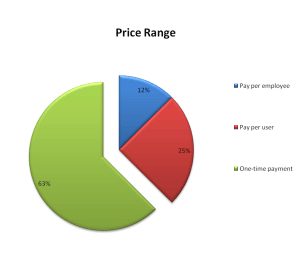
HR carries unavoidable costs — recruiting expenses, office resources, and the less visible liabilities of turnover and employee dissatisfaction. The value of a professional HR management service shows up precisely when those costs are converted into numbers: a single bad hire or a preventable resignation typically costs more than months of professional HR support. Providers generally price as a flat fee or per employee, scaled to the services you actually need.
3 Benefits of an HR Management Service for Small Businesses
Don’t undervalue what outsourced HR management can do for a smaller company. Partnering with an HRM specialist saves time and money across the whole talent chain — attracting top candidates, strengthening onboarding, lifting retention, improving employee benefits, and reducing compliance headaches, with HR expertise reachable remotely whenever you need it.
1. Retain quality employees. Attracting top talent takes real time and money. Industry research puts the average time to identify the right candidate at around 23 days — while the best candidates leave the market in roughly 10. The more specialized or technical your business, the tighter that window gets, and asking the wrong questions in that window means hiring the wrong person.
2. Enhanced recruiting and onboarding. Even the ideal candidate succeeds or fails based on how they are brought in. Onboarding — introducing the new hire to the business and setting them up for achievement — done badly makes a good hire more likely to fail; done well, it locks the hire’s value in.
3. Efficiency and resource savings. The clearest benefit of an HR outsourcing partner is the time it returns: with a specialist handling HR, you spend your hours expanding the business and improving your products and services instead.
Managing Human Resources in Small Businesses
Every firm manages human resources, but smaller companies carry more concentrated risk — one poor hire damages a ten-person workplace far more than a thousand-person one. Small business owners typically strengthen their people processes by:
- Evaluating current operations to decide whether new hires are needed or existing staff and production methods can be used more efficiently
- Engaging directly in hiring, with job descriptions that align candidates to real company requirements
- Establishing formal policy documentation, such as an employee handbook
- Offering ongoing education matched to the demands of the specific sector
- Ensuring a workplace where employees are treated properly and can be productive
Frequently Asked Questions
What are HR management services?
Human resources management (HRM) is a strategic approach to improving employee performance and experience — concentrating on efficient staffing, onboarding, deployment, and oversight of the people inside a business.
What are examples of HR services?
Common services include hiring and onboarding, offboarding, payroll, updating job descriptions and contracts, tracking working time, handling absences, and sourcing learning and development materials.
Why are HR services important?
HR safeguards the business’s interests, reputation, and prosperity — meeting legal requirements, running administrative procedures economically, and developing the policies and people a firm needs to grow.
In Conclusion
Organizational structure survives on the systems that maintain it — and that is what an HR management service provides. By partnering with a provider like Payroll2Bangladesh, you gain access to human capital expertise, benefits administration, risk mitigation, compliance, payroll, and real-time technology built to lift SMBs out of HR complexity — while you concentrate on developing your workforce and expanding your company. To find out how your small business can benefit today, get in touch with us.