
How Important Is HR Compliance & Risk Management to Your Company?
Critically important — HR compliance and risk management is not just a legal necessity, it is a strategic advantage. It keeps your company aligned with labor laws, minimizes operational risk, and sustains a fair, safe workplace. Ignoring it is expensive: fines, lawsuits, reputational damage, and employee dissatisfaction all follow non-compliance.
As regulatory landscapes evolve, a strong HR compliance and risk management framework stops being optional. It also protects something less visible: a secure work environment raises employee morale and satisfaction — which is why HR compliance service sits at the foundation of any company’s long-term success.
An HR compliance service is essential for any business because the consequences of non-compliance are costly: fines, penalties, and lawsuits all result from not having the proper HR policies and procedures in place.
Why Your Company Needs HR Compliance & Risk Management
In today’s business climate, compliance is more than ticking boxes — it means integrating legal and ethical standards into the core of your HR strategy. As your business grows, the laws that govern it grow with it, and an HR compliance service keeps you current on every change while protecting your people and your balance sheet.
Key reasons your company needs it:
- Ensure alignment with national and local employment laws
- Protect against lawsuits, audits, and regulatory fines
- Establish a culture of transparency, fairness, and inclusion
- Keep policies current as regulations change
- Support sustainable growth with lower legal risk exposure
Whether you’re a small startup or a large enterprise, a system for monitoring and managing HR risk — overseen by experienced HR compliance professionals — is what keeps growth from turning into exposure.
Industry market research estimates the global HR compliance service market grew from $5.72 billion in 2022 to $6.52 billion in 2023 — roughly 14.1% growth in a single year.
Common Challenges in HR Compliance & Risk Management
- Frequent regulatory changes: Keeping up with constantly evolving labor laws is a full-time job — and failing to keep up ends in audits or financial penalties.
- Limited resources: Many organizations have no dedicated compliance team, which produces oversight gaps and reactive risk management.
- Balancing compliance with business goals: Companies struggle to reconcile operational efficiency with strict adherence to compliance obligations.
- Consistency across locations: Compliance across departments and multiple offices demands well-documented, centralized policies.
- Data privacy and security: HR teams handle sensitive personal data; mishandling it triggers breaches and legal complications under data protection laws.
How to Overcome HR Compliance Problems: 5 Steps
1. Identify the problem. Locate the weak areas in your HR compliance through an internal audit or structured feedback from employees and stakeholders.
2. Develop a plan. Address the identified gaps with policy and procedure changes, training programs for employees and managers, or additional staff to support compliance efforts.
3. Communicate with employees. Compliance only works when people know the rules. Regular training sessions and workshops make obligations and responsibilities clear.
4. Monitor and evaluate. Regular audits and reviews confirm the plan is working, surface areas for improvement, and let you adjust before small gaps become violations.
5. Seek professional help. Complex compliance issues justify outside expertise — a compliance consultant or legal expert who builds effective strategies for managing the risk.
5 Benefits of HR Compliance Service
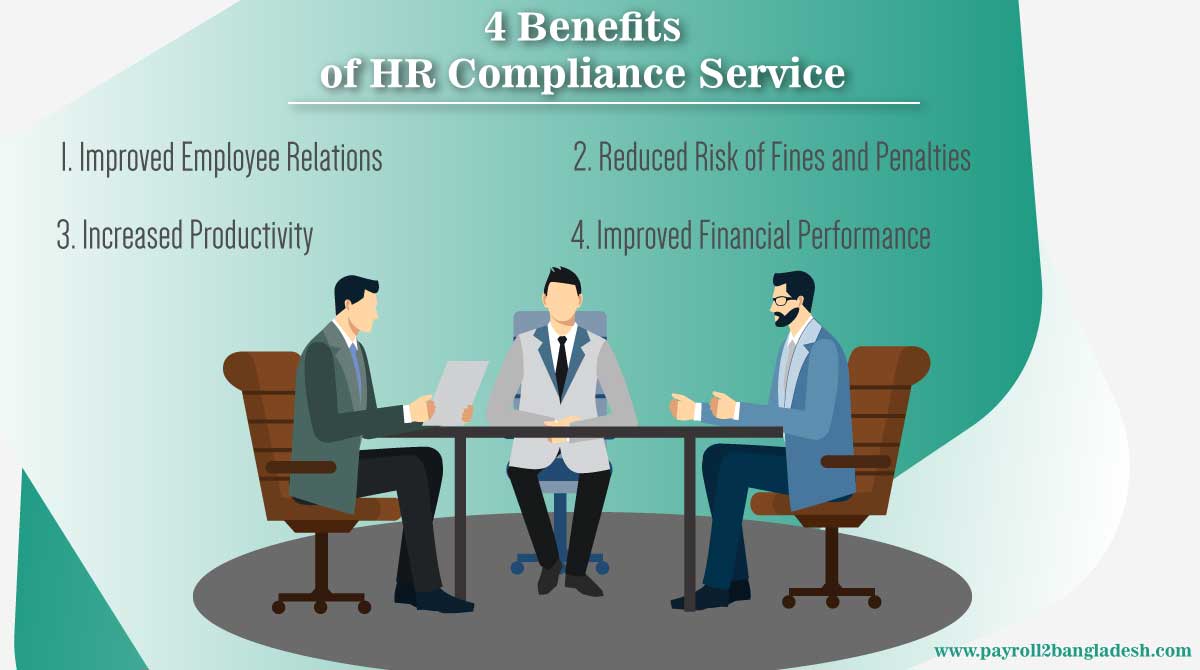
1. Improved employee relations: Compliance with labor laws ensures employees are treated fairly — lifting morale and reducing the risk of costly litigation.
2. Reduced risk of fines and penalties: HR compliance keeps employers clear of the fines and penalties that follow violations of national and local law.
3. Increased productivity: When employees see their rights respected, engagement rises — and job performance follows.
4. Improved financial performance: Lower legal liability and fewer fines translate directly into a stronger bottom line.
5. Reduced workplace stress: Fair, lawful treatment lowers stress across the workplace — a benefit that compounds through retention and culture.
3 Key Tips for HR Compliance
1. Utilize a payroll system. Automating payroll streamlines the process and minimizes errors, with useful features like vacation tracking and direct deposit built in.
2. Stay compliant on payroll and tax. Track the ever-changing rules around payroll compliance: complete every tax form correctly, file on time, and withhold the correct amounts from employee paychecks.
3. Accurately track hours. Correct pay starts with correct hours — implement a system where employees record time easily and supervisors approve the timecards.
Conclusion
HR compliance and risk management is how a company navigates the complex, ever-evolving landscape of employment law without paying for the lessons in fines and lawsuits. Our HR Compliance Service gives clients the guidance to remain compliant, maintain a safe and healthy workplace, and reduce legal exposure — and we look forward to doing the same for your HR compliance needs.
Frequently Asked Questions
What are some common HR compliance issues?
Wage and hour regulations, anti-discrimination laws, workers’ compensation, health and safety standards, and record-keeping requirements top the list.
How can an HR compliance service help?
It keeps your organization current on legal developments in your industry and ensures your policies and procedures comply with every applicable law and regulation.
What services does an HR compliance service provide?
Typical services include reviewing and updating policies and procedures, training staff on relevant compliance topics, and providing guidance on legal issues as they arise.