
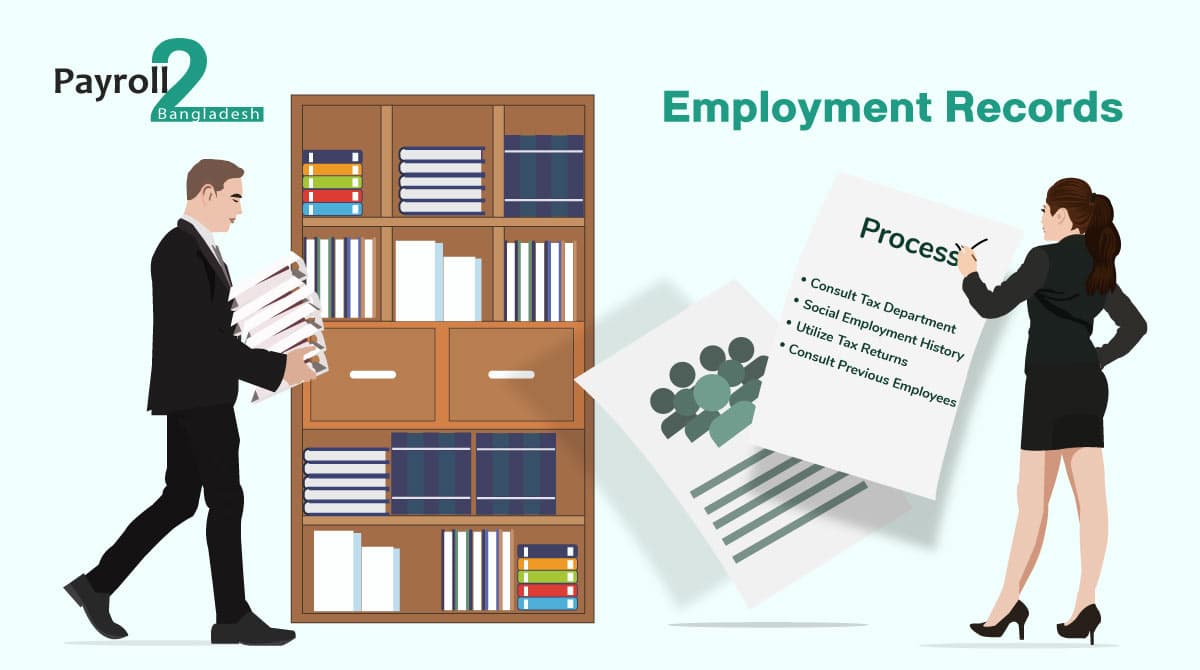
What employment records must a business keep?
Employment records are the documents a business keeps on every worker: employment information such as job title and salary, together with personal information such as birth date and home address. Records may be stored on a desktop system or on manual data cards, and are used for salary and personnel management.
Data protection law governs how that information is held, used and disclosed. The Data Protection Act of 1998 sets out seven data protection principles covering the handling of employment data, and applies to both paper and electronic employment records. Treating the data privacy Act as applying to all employee records is the safer assumption and best practice.
According to the Civilization for Human Research Management, 92% of surveyed employers use one or even more types of employment records checks, according to a 2019 Human Resource report.
Why are employment records checks important?
Employee records matter because they form a complete document of a worker’s employment history with a company. They hold the worker’s job title, effective dates, pay and any other employment-related information, and employers use them to decide on promotions, raises and terminations. Records also feed year-end forms such as W-2s and 1099s.
Employers generate and receive a large volume of employment records, so management has to make a compelling business case for building a proper records management program.
Key elements
- An employment records check helps manage the creation, expansion and ease of access of company records.
- Records also assist with regulatory compliance and lower the risk of litigation.
- Background verification improves productivity and efficiency, as well as the appearance of the office.
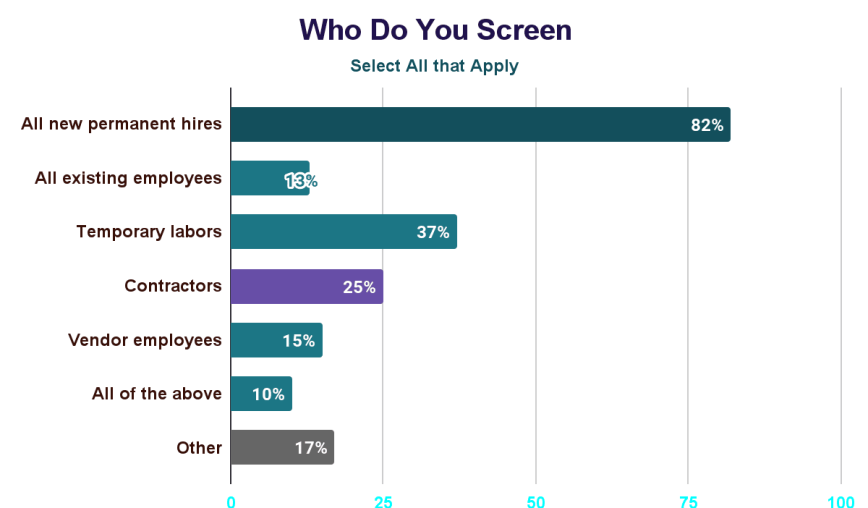
How do you discover employment records?
Finding employment records is not an easy task, and several routes exist for reconstructing an employment history. An individual can pursue them personally, but third-party background verification providers play a large role in this work, which is the main reason employers outsource verification rather than attempt it in-house.
Consult the state tax department
Employment records can often be obtained from state income tax records and unemployment offices, provided the individual worked for in-state employers.
Request a Social Security employment history
Completing a “Request for State Pension Earnings Information” form allows a statement of the work record to be requested from the Social Security System. The statement gives specific information about employment records, including dates of employment, employer addresses and earnings.
Use tax returns
Anyone holding duplicates of their tax filings should also hold duplicates of the W2 forms filed with them. Those forms supply corporate data and allow employment dates to be calculated.
Request transcripts of tax filings
Where copies of prior years’ tax returns are not available, transcripts can be requested instead. The IRS publishes specific instructions on obtaining tax return transcripts online or by mail.
Consult previous employers
Where start and end dates are uncertain, an employment record can be reconstructed by contacting the human resources department of each former employer and asking them to confirm the exact employment history held on file.
What are the problems with employment records management?
Three record-keeping challenges recur in employment records management, and an organization has to overcome all three to manage its records effectively: capturing the data, storing it, and protecting it. Each one pulls against the others, which is why the balance is difficult to strike.
1. Data capture
The task here is managing the massive volume of digital data generated every day. Many organizations struggle to strike a balance between storing online data on conventional storage solutions and storing it in a way that allows quick retrieval when needed.
2. Data storage
The problem here is storing digital employment records efficiently, without consuming far too much space on classical storage solutions.
3. Data protection
Data protection is a further area where many organizations struggle. Businesses want to protect their data and keep it private, and they also want it available for business purposes. The difficulty is balancing the two at the same time.
Benefits of employment records check services
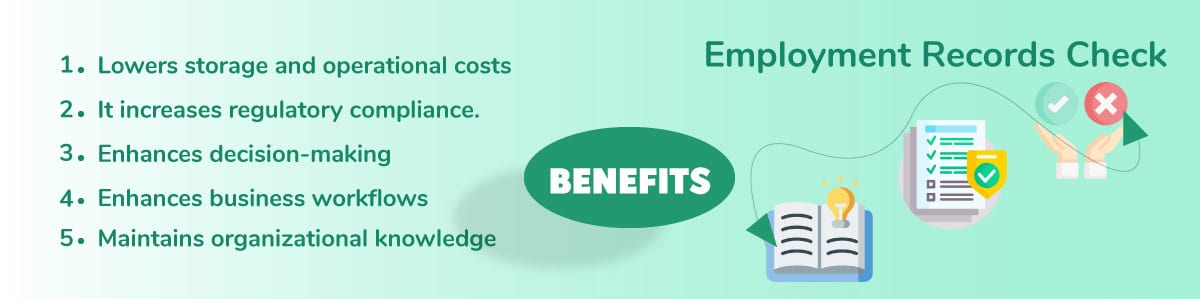
The benefits of employment records management are substantial for businesses, yet the majority do not make the effort required to develop a proper and clear program. Five benefits account for most of the value.
1. Lowers storage and operational costs
One of the most substantial record-keeping benefits is the ability to reduce storage costs — hardware, office furniture, drawers and similar — as well as operational costs.
2. Increases regulatory compliance
Many businesses report improved compliance with rules and policies as one of the most substantial employment records management benefits. Those businesses frequently work under a large number of constraints imposed by government or by the industries in which they operate.
3. Enhances decision-making
Making critical information widely available in a timely manner allows management to respond to company developments faster and with informed business decisions, which leads to greater business success.
4. Enhances business workflows
Employment records management shortens internal organizational workflows by reducing wasted time and making information available as soon as possible.
5. Maintains organizational knowledge
Records contain information that can be extremely beneficial to a business, and the primary goal of record-keeping is to ensure every record is kept safely and for as long as it is required.
What types of businesses require employee records?
Many different types of business require employment records. Companies with a lot of employees need employee information tracked in order to handle payroll and benefits. Growing companies must keep records of employee data so that new staff are properly incorporated into the organization, and companies hiring a large number of staff at once may need employment records to ensure compliance with all applicable employment laws.
Employment records verification in Bangladesh
Payroll2Bangladesh provides background check and employment records verification services in Bangladesh. For HR, payroll and accounting services, contact us today.
Frequently Asked Questions About Employment Records
What information do employment records contain?
Employment records hold employment information such as job title, effective dates, pay and other employment-related details, along with personal information such as birth date and home address. Records may be held on a desktop system or on manual data cards, and both paper and electronic forms fall under data protection rules.
Why do businesses keep employment records?
Employers use employment records to decide on promotions, raises and terminations, and to generate year-end forms such as W-2s and 1099s. Records also support payroll and benefits administration, the onboarding of new staff, and compliance with all applicable employment laws.
What are the main challenges in managing employment records?
Three challenges recur: data capture, meaning handling the volume of digital data generated daily; data storage, meaning holding records efficiently without consuming excessive space; and data protection, meaning keeping records private while still making them available for business purposes. Balancing all three at the same time is the difficulty most organizations report.
Which businesses need employment records the most?
Companies with large headcounts need employment records to run payroll and benefits. Growing companies need them so new staff are properly incorporated into the organization, and companies hiring many people at once need them to demonstrate compliance with applicable employment laws.