
How Can You Overcome Company Incorporation Problems?
Company incorporation problems — document errors, registration delays, and compliance gaps — are fixed with a pre-registration plan and expert help. To incorporate a company, the owners gather every required document, including the articles of association, and file the paperwork with the company registrar in the country where the business will operate.
When a company incorporates, it creates a new legal entity — and problems can surface at every step of the process. Payroll2Bangladesh stands ready with services that make incorporating a business straightforward.
Bangladesh is a relatively open country when it comes to overseas investment, allowing up to 100% foreign ownership in most industries. In Bangladesh, offshore company formation is expected to take 45-60 days on average.
Key Elements
- Protection of personal assets is one of the most significant benefits of incorporation.
- Raising funds is often easier for an incorporated company because it can issue stock shares.
- An incorporated company may qualify for a variety of tax breaks not accessible to individuals or partnerships.
What Are The 5 Most Pervasive Company Incorporation Challenges In Bangladesh?
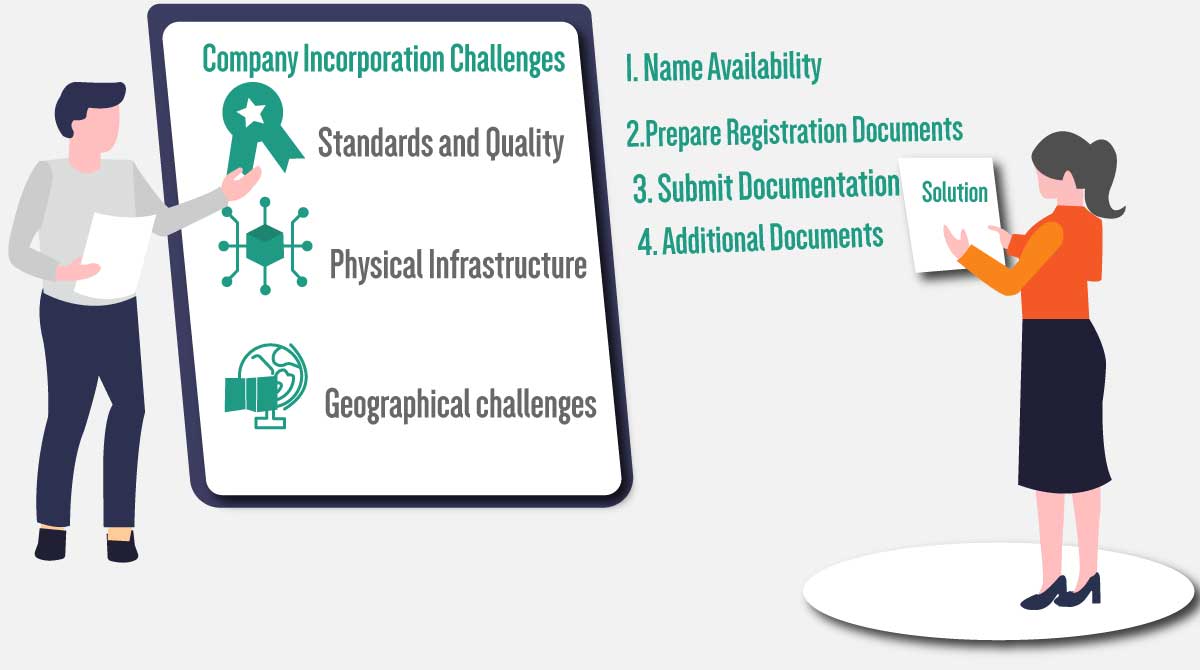
The five most pervasive company incorporation challenges in Bangladesh are weak quality standards, limited marketing capability, a shortage of skilled workers, poor physical infrastructure, and geographical distance from lucrative global markets — compounded by costly, inefficient ports. Each one raises the difficulty and cost of forming a company locally.
1. Standards and Quality: No quality control strategy is in place, and support services for company formation remain scarce — so not all businesses are aware of quality principles.
2. Marketing: Bangladeshi businesses lack the necessary marketing capabilities and networks, and marketing around company incorporation remains at a low level.
3. Skilled Worker Shortage: A shortage of competent workers stands as a major hindrance to manufacturing production and to offshore company formation.
4. Physical Infrastructure: Bangladesh’s physical infrastructure is in poor condition, which reduces the attractiveness of incorporating locally.
5. Geographical Challenges: Bangladesh sits geographically cut off from more lucrative global markets, and corrupt, inefficient ports raise the cost of production dramatically — making incorporation more challenging.
How Do You Fix Company Incorporation Difficulties?
Business incorporation difficulties are fixed in two phases. Pre-registration: agree the firm’s nature, name, management, shares, and investment; sign a pre-incorporation agreement; set up separate accounting; appoint a board; and adopt bylaws. Registration and after: pay RJSC fees, complete registration, then collect the trade licence, TIN, VAT, and clearance certificates.
The formation of a company requires submitting paperwork and certificates from the appropriate authorities, and the post-registration stage includes several certificate collections of its own.
Pre-Registration Steps
- The owners must agree on the nature of the firm, its title, management structure, shares, and investment.
- Separate financial accounting and bookkeeping methods must be established once the company becomes a legal entity.
- Business owners should sign a pre-incorporation agreement outlining their roles and duties before incorporation.
- Shares can be distributed, and a board of directors should be established to take formal control of the incorporated organization.
- Company bylaws should be adopted at incorporation.
The first stage of incorporating a business is a detailed plan built to fully comprehend the requirements. Once the plan exists, name clearance and the bank procedures follow — the necessary steps to complete business incorporation registration.
What Are The Advantages Of Company Incorporation?
Incorporating a business turns a sole proprietorship or general partnership into a company formally recognized in its country of incorporation. When a company incorporates, it becomes its own legal business structure, set apart from the individuals who founded it. Five benefits follow:
- Limited Liability: Shareholders’ personal assets are protected from creditors of the company; if the company incurs debt or is sued, personal assets usually stay safe.
- Perpetual Existence: Corporations are separate legal entities that continue to exist even when owners or management change — a real source of stability.
- Tax Benefits: Depending on the corporate structure, there can be tax advantages, such as the ability to deduct business expenses.
- Ability to Raise Capital: Corporations can raise capital more easily through the sale of stocks — an advantage for growth and expansion.
- Enhanced Credibility: Incorporation makes a business look more legitimate, easing dealings with other companies, customers, and bank financing.
How Do You Complete The RJSC Registration?
The authorities must pay the RJSC fees to the specified bank after completing the earlier processes, then proceed to the Registrar of Joint Stock Companies (RJSC) office and complete the registration. Finally, the same entity issues the registration certificate.
Post-Registration Requirements
After completing registration, a business must collect:
- Trade licence
- Tax Identification Number (TIN)
- VAT registration certificate
- Fire safety certificate
- Environmental clearance certificate (if necessary)
Payroll2Bangladesh’s Employer of Record services team, corporate executives, and accountants can assist with every aspect of the offshore company formation process listed above.
How Can Payroll2Bangladesh’s Services Solve Incorporation Problems?
Company registration services can assist with foreign company registration swiftly and simply. The services provided include:
- Checking whether a company name is available, free of charge.
- Preparing documents for review against international qualifications — a professional incorporation team manages the paperwork.
- Transmitting those documents to the appropriate agency in the jurisdiction where the company seeks formation.
- Completing any further required filings, such as newspaper publications, first reports, or information statements.
Frequently Asked Questions
How long does company incorporation take in Bangladesh?
Offshore company formation in Bangladesh is expected to take 45-60 days on average. The timeline runs from planning and name clearance through bank procedures, RJSC fee payment, and registration at the Registrar of Joint Stock Companies, after which the registration certificate is issued.
What certificates does a company need after registration in Bangladesh?
After registration, a Bangladeshi company must collect a trade licence, a Tax Identification Number (TIN), a VAT registration certificate, a fire safety certificate, and — where necessary — an environmental clearance certificate. Organised collection of these documents keeps the newly incorporated company compliant from its first day of operation.
Can foreigners own 100% of a company in Bangladesh?
Yes — Bangladesh is a relatively open country for overseas investment and allows up to 100% foreign ownership in most industries. Support services such as name clearance, document preparation, and filings with the appropriate agency help foreign owners complete the incorporation correctly.
Final Words
Knowing the difficulties of company incorporation is critical — finding the solutions is the actual challenge. Adjust and adapt, or the business may find itself without the competitive advantage it needs to succeed.
Incorporate in Bangladesh without the paperwork maze. Payroll2Bangladesh handles name clearance, document preparation, RJSC filing, and post-registration certificates end to end — get in touch to start.